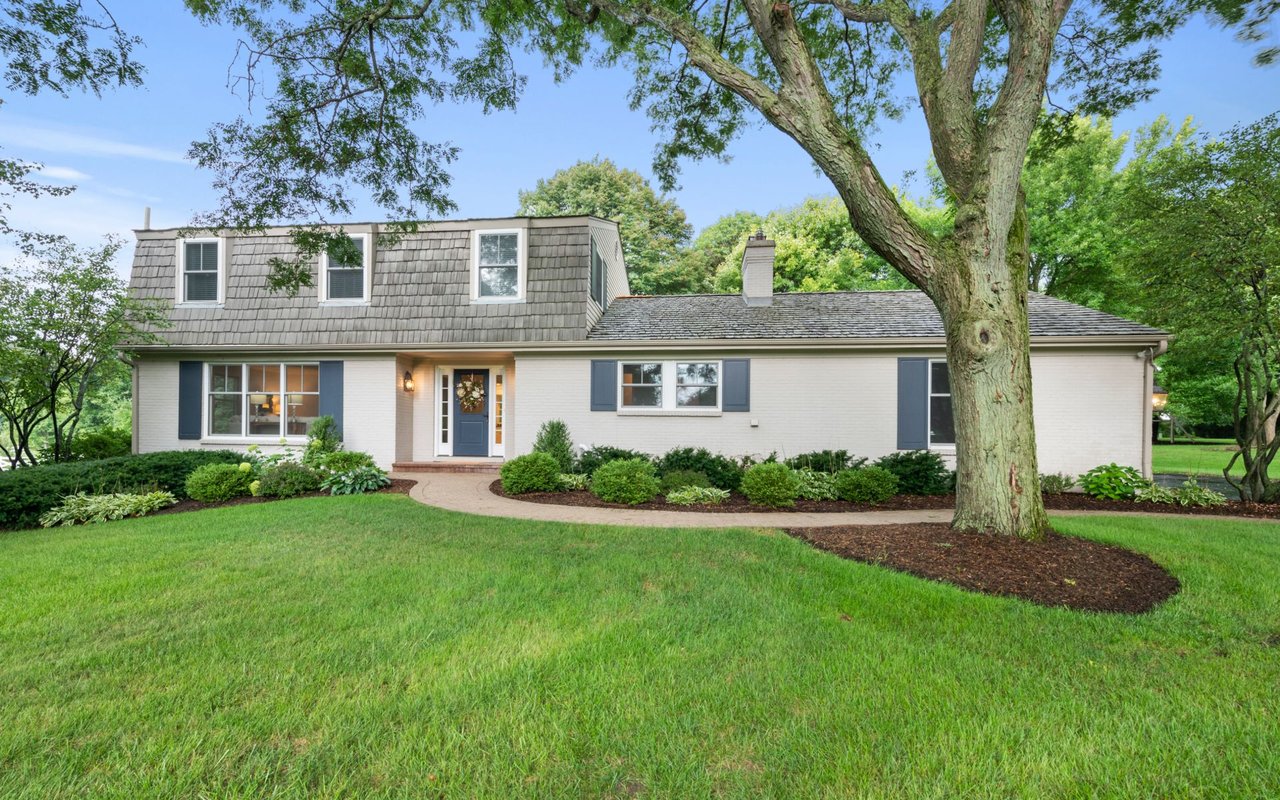
A buyer walks a big corner lot in Robbins Park, sees a tired 1895 Colonial Revival that needs a new roof, new mechanicals, and probably a new foundation under the porch, and does the math the way most people do: the land is worth more than the house, so they will tear it down and build what they actually want. Somewhere in that math is an assumption that the village's historic preservation review is a formality, since everyone knows the commission can't legally stop a code-compliant demolition anyway.
That assumption is technically correct and practically wrong. The Hinsdale Historic Preservation Commission's votes on demolition and new design are advisory only, meaning a homeowner can proceed even over an outright rejection. But one recent Robbins Park case shows what "the commission can't say no" actually costs in time. The owners closed on their Third Street property in April 2024 for close to $2.3 million. Their architect told the village in January 2025 that the house had fallen into disrepair and wasn't a candidate for rehabilitation. The commission didn't sign off on both the demolition and the replacement design until August 2026. That's not a story about a fight. It's a story about a calendar.
Advisory Only Doesn't Mean Fast
The village's own framing captures the tension. When Hinsdale overhauled its preservation ordinance in 2024, Village President Tom Cauley told trustees the goal was a process homeowners could live with, not one that dragged on indefinitely.
"At the end of the process, which will be completed in a reasonable length of time, homeowners can do what they want with their properties, no matter what the HPC and board may decide."
"Reasonable" is doing a lot of work in that sentence. The commission has no veto, so the only thing standing between a purchase and a permit is a sequence of required steps, each with its own clock, and each one runs whether or not anyone objects.
The Steps, in Order
For a property in the Robbins Park Historic District or the Downtown Hinsdale Historic District, or any individually landmarked home anywhere in the village, this is roughly the path a demolition and rebuild has to clear, based on the village's 2024 ordinance update and the village's own alteration and demolition guidance:
| Step | What has to happen |
|---|---|
| Preliminary design meeting | Owner meets with the Ad Hoc Historic District Design Review Team before filing; written feedback is due within 15 days |
| Historic and Architectural Impact Study | Commission may require one as part of the formal application; cost is capped at $250 |
| Certificate of Appropriateness hearing | Historic Preservation Commission votes on demolition and, separately, on the new design; the vote is advisory only |
| Appeal window | If the commission denies the certificate, the owner has 15 days to appeal to the Village Board |
| Village Board review | If appealed, the board must hear the matter within 60 days of the commission's vote |
| Demolition notice | Village must notify property owners within 250 feet before a demolition permit can issue |
| Notice waiting period | At least 30 days must pass after the notice certification is filed before the permit can be issued |
| Rebuild clock | Once the structure comes down, construction must begin, or the site must be restored, within 60 days |
None of these steps requires the commission to agree with you. All of them require you to wait for someone else's schedule.
What Two Years Looked Like in Real Time
Go back to the Third Street case. The purchase closed in spring 2024. The architect's letter explaining why the house wasn't salvageable went to the village that winter. By the time the commission held its hearing in the summer of 2026, roughly two years had passed between closing and final sign-off, and about a year and a half between the formal request and the vote. Coverage of the August 2026 hearing describes a routine meeting: commissioners asked about window cladding, the architect agreed to lighten it, and the demolition and the new design both passed on the same roll call vote. There was no standoff. The delay wasn't a fight. It was the process working exactly as written, one scheduled step after another.
That pattern shows up across other Robbins Park teardowns on the public record, from a 1937 Colonial Revival on Eighth Street to a 1928 French Eclectic on Sixth Street to a 1905 Prairie School home on First Street. Owners, prices, and architectural styles differ. The sequence of hearings, notice periods, and appeal windows does not.
Every Step Has a Price Attached
The 2024 ordinance also raised the cost of going through this. The demolition fee for a Robbins Park property increased from $7,928 to $11,100, a change the village said was meant to cover the added staff and consultant time the new design review step requires. That's on top of standard permitting costs and whatever a buyer is paying to carry the property while the clock runs.
Renovation Has a Faster, Cheaper Lane
The village built an alternative on purpose. Homeowners who put their property into the historic overlay district, an application process, not an automatic designation, can qualify for property tax rebates, building fee waivers, and faster review on future work. Illinois law separately allows an 8 to 12 year property tax freeze for owners who rehabilitate a certified historic property instead of tearing it down.
The village issued only 26 teardown permits in 2023, down from a pace that one longtime Historic Preservation Commission member recalled topping 100 a year in prior decades, though officials have been careful not to credit the incentive program alone for the shift. Whatever the cause, the gap between the two paths is real: renovate under the overlay program and the village moves faster and helps with the bill; demolish in a historic district and you're on the longer track outlined above.
Why the Village Keeps Adjusting This
Robbins Park earned its spot on the National Register of Historic Places in 2008, when about 65 percent of its roughly 475 buildings were considered historically significant or contributing. A 2024 report from The Hinsdalean put the number of homes lost to demolition since then at around 31. At an April 2026 hearing on a proposed teardown at 305 S. Garfield Street, commission chair John Bohnen raised a concern that goes beyond any single house: enough turnover, he said, and the district risks losing the very designation that makes it a historic district in the first place. The commission approved that demolition anyway, 5 to 0. The chair's worry and the vote in favor of demolition aren't a contradiction. They're the same tension that shapes every step in the table above: preserve the character of the neighborhood while still respecting that the commission's opinion, by design, isn't the final word.
What This Means If You're Shopping a Teardown Candidate
If you're looking at an older home in Robbins Park or downtown Hinsdale with a rebuild in mind, a few questions are worth answering before you write an offer, not after you close:
- Is the property individually landmarked, inside a historic district, or neither? The review requirements above only apply to landmarked properties and the two historic districts.
- Has a preliminary design review meeting already happened? If not, that's your first scheduled step, and the clock hasn't started yet.
- What does your financing and any bridge or construction timeline assume about permit issuance? Build in months, not weeks, for a lot inside Robbins Park.
- Would the historic overlay incentive program change your math if renovation, rather than demolition, is genuinely on the table?
A Few Questions Worth Asking Before You Commit
Does this process apply anywhere in Hinsdale, or just Robbins Park? The Certificate of Appropriateness requirement covers Robbins Park, the Downtown Hinsdale Historic District, and any individually landmarked property regardless of location. A home outside those areas and without a landmark designation follows the village's standard demolition permit process, including the 250-foot notice and 30-day wait, without the added historic design review layer.
Can I skip the preliminary design review meeting? The village's own guidance describes it as something the owner may pursue before a formal application, which is why some owners go straight to the Certificate of Appropriateness hearing. Skipping it doesn't remove the hearing itself, and commissioners have asked applicants to revisit design choices even after a lot of upfront planning.
What if I only want to add on, not tear down? Alterations and additions to a landmarked property or a home in a historic district still require a Certificate of Appropriateness, but the fee structure and incentive programs are different from the demolition track, and the historic overlay program specifically rewards this path with rebates and faster turnaround.
None of this means a Hinsdale teardown is a bad decision. It means the timeline on the listing sheet and the timeline in the village's process are two different documents, and only one of them is legally binding. If you're weighing a teardown candidate against a move-in-ready home, or trying to figure out whether a specific lot in Robbins Park is worth the wait, Annamarie Moisé can walk the property with you, check its district status, and help you build a realistic timeline before you're the one explaining a two-year gap to your contractor. Call Anna today to start your move.