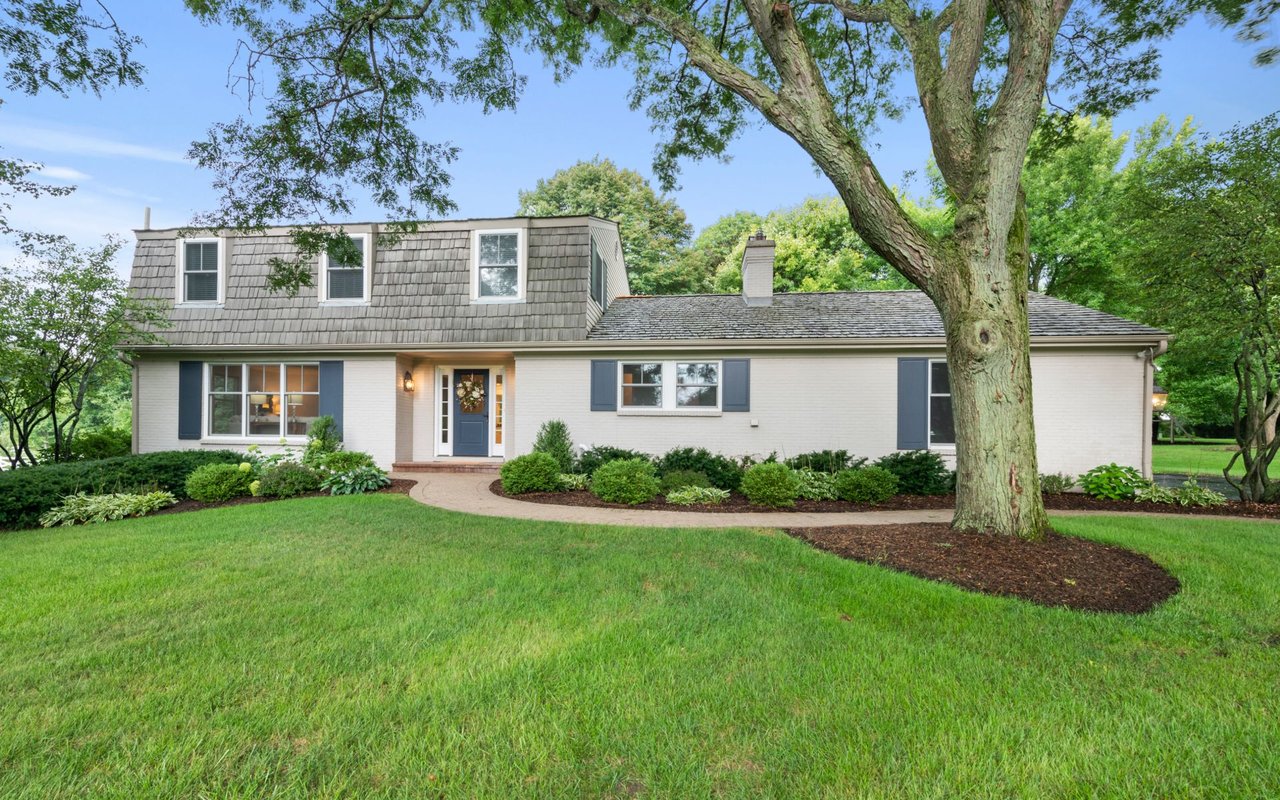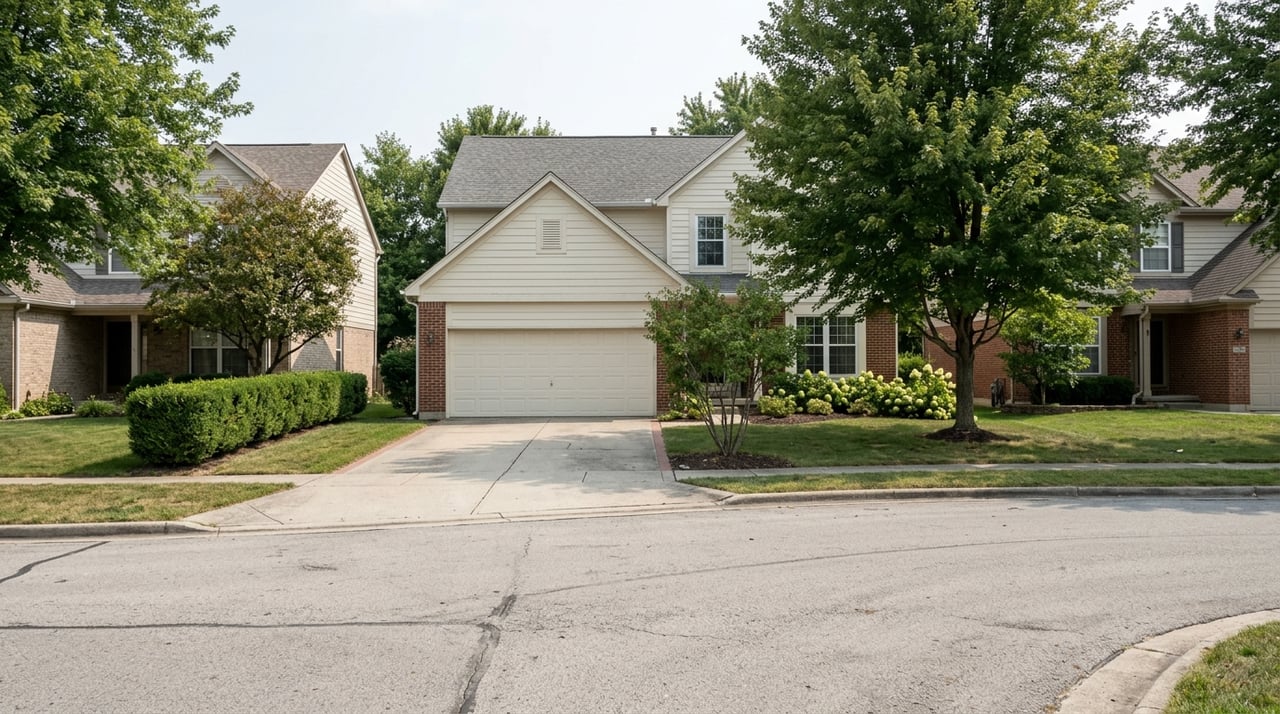
Picture two Naperville listings pulled up side by side. Same price. Same square footage. Close enough in ZIP code that a buyer would reasonably assume the tax bill lands in the same neighborhood too.
It often doesn't. Not because one house has better landscaping or a newer roof, but because of a line that never shows up on a listing sheet: the boundary between DuPage County and Will County runs straight through Naperville, and it does not track the ZIP codes, the subdivision names, or even the school district lines in any way a buyer could guess from the outside.
The County Line Everyone Mentions, But Rarely Prices Out
That Naperville sits in two counties is common knowledge by now. What gets skipped is what the split actually costs, parcel by parcel.
DuPage County's effective property tax rate runs roughly 1.95 to 2.2 percent of market value, depending on the exact combination of taxing bodies attached to a parcel. On a $400,000 DuPage County home, that works out to somewhere between $7,800 and $8,800 a year before exemptions. Cross into the Will County side of the same city, and the picture changes. Ownwell's tax data for the Will County portion of Naperville puts the median effective rate at 2.35 percent, with a median annual bill of $12,734.
Here is the comparison laid out directly:
| DuPage County side | Will County side | |
|---|---|---|
| Median home price | $443,310 | $544,293 |
| Effective tax rate (ZIP range) | 2.03% to 2.23% | 2.13% to 2.37% |
| Median annual tax bill | ranges $7,227 to $9,936 by ZIP | $12,734 |
| Bill spread (25th to 90th percentile) | not separately reported | $9,096 to $17,811 |
That last row is worth sitting with. Within just the Will County portion of Naperville, a homeowner at the 90th percentile pays close to double what someone at the 25th percentile pays, on properties that could easily list for similar prices.
The ZIP Code Isn't a Reliable Guide Either
This is the part most guides stop short of, and it's the detail that actually changes how a buyer should shop. ZIP code 60564 shows up in both counties' data, and it doesn't carry the same rate in each. On the DuPage County side, 60564 carries a median effective rate of 2.23 percent. On the Will County side, the same ZIP shows 2.37 percent. Same five digits on the envelope, different taxing bodies underneath the parcel.
ZIP 60540 tells an even more counterintuitive story. On the DuPage side, 60540 homes carry a median bill of $9,936. On the Will County side, the median bill for the same ZIP is $7,766, lower, even though Will County's overall rate runs higher than DuPage's. The direction isn't consistent. What's consistent is that a mailing ZIP code tells you which post office serves the address. It does not tell you which county assessor, which school district, or which combination of levies actually produced the number on the tax bill.
School Boundaries Run on a Third Map
Naperville Community Unit School District 203 covers most of central and northern Naperville, plus small portions of Lisle and Bolingbrook, and serves roughly 16,000 students through Naperville Central and Naperville North high schools. Indian Prairie School District 204 is considerably larger, roughly 26,000 students across 34 schools, and its footprint extends well past Naperville into Aurora, Bolingbrook, and Plainfield, feeding three high schools: Neuqua Valley, Waubonsie Valley, and Metea Valley.
Neither district boundary follows the county line, and neither follows the city limits. Naperville Township's own assessor's office acknowledges as much directly. It publishes side-by-side sample tax breakdowns for a typical home in District 203 and a typical home in District 204 out of Aurora, because the levies stacked on top of each are genuinely different products, not a single Naperville number with minor variation.
The overlap isn't random, either. District 204's newer, larger-lot subdivisions sit disproportionately in the pricier Will County portion of the city (median home price $544,293), while District 203's older, more established neighborhoods sit mostly in the lower-priced DuPage core (median home price $443,310). Price, tax rate, and school assignment tend to move together in Naperville, but they are governed by three separate maps that happen to overlap in complicated ways rather than one master boundary a buyer can memorize.
What This Actually Means If You're Comparing Listings This Fall
If a shortlist includes homes on both sides of the city, or even homes in the same ZIP code near the county line, a few checks matter more than the listing description:
- Ask for the parcel's PIN, not just the address, and look up the actual taxing bodies attached to it through the DuPage County Clerk's property tax reports rather than assuming from the neighborhood name.
- Confirm which county a parcel sits in before running any tax comparison. Given the ZIP-code overlap, an address alone won't settle it.
- Verify the school assignment directly through District 203's own boundary tool, since attendance lines can run down the middle of a block regardless of subdivision name.
- Ask for the current tax bill, not a percentage estimate. Illinois bills are paid in arrears, so last year's bill reflects the prior owner's exemptions, not the ones a new buyer will or won't qualify for.
Timing matters here too. DuPage County's current cycle taxes the 2025 assessment and bills it in 2026, following the same two-installment pattern the county has used in recent years, summer and early fall. For anyone closing on a Naperville home in the next few weeks, that second installment lands close to September 2, which affects how taxes get prorated at the closing table. The annual assessment appeal window, which closed June 1 this year, is worth marking for next spring if a new owner wants to challenge an assessed value once they've lived with the actual bill for a full cycle.
A Few Questions Worth Asking Before You Write an Offer
Does the county line affect anything besides the tax bill? For most buyers, the tax bill is the number that actually shows up in a monthly budget, so it's the one worth verifying first. Other county-level differences exist, but they rarely change a household's bottom line the way the tax rate does.
If a home is on the Will County side, does that guarantee a higher bill? Not automatically. The 60540 comparison above shows a lower Will-side bill than the DuPage-side bill for the same ZIP, because home values and specific taxing bodies vary more than the county label suggests. Rate direction and dollar direction don't always match.
Can I predict my child's school from the county a home sits in? No. County lines, ZIP codes, and school boundaries are three separate systems in Naperville. The only reliable answer comes from checking the exact parcel against the district's own boundary map.
Run the Numbers Before You Fall in Love With the House
None of this means Naperville is a harder place to buy. It means the headline price on a listing is the beginning of the math, not the end of it. Anna's background in accounting means she treats a parcel's actual tax history the same way she treats a home inspection report: as something to verify before an offer goes in, not something to explain after closing.
If you're comparing two Naperville addresses right now and want the real tax picture on each one before you decide, MoveWithMoise can pull the specific numbers for you. Call Anna today to start your move.